Tampilkan postingan dengan label news. Tampilkan semua postingan

Randy Johnson inducted into Baseball Hall of Fame

Randy Johnson inducted into Baseball Hall of Fame


Three pitchers who became dominant after trades and a rock-solid catcher-turned-second baseman entered the Baseball Hall of Fame on Sunday.

Randy Johnson, Pedro Martinez, John Smoltz and Craig Biggio basked in the moment, with at least 40,000 fans cheering them one more time.

Johnson, at 6-foot-10 the tallest player elected to the Hall of Fame, gave special thanks to his parents. His father died in 1992. His mother, Carol, was watching from the front row.

“Thank you, mom. You’re the Hall of Famer,” Johnson said.

Johnson became a 20-game winner in 1997 and won four consecutive Cy Young awards with the Arizona Diamondbacks, leading them to the World Series championship in 2001. He finished with 303 victories in 22 seasons.

Playing through an era tainted by steroids and ruled by offense — compliments of bulked-up sluggers, a smaller strike zone and smaller ballparks — Johnson, Martinez and Smoltz proved indomitable. They combined for 735 wins, 11,113 strikeouts and nine Cy Young Awards.

Biggio, who played four positions in his 20-year career, all with the Houston Astros, was indefatigable, becoming an All-Star at second base and behind the plate.

“We changed the culture in Houston by making it a baseball city,” said Biggio, who grew up on New York’s Long Island. “To the Astros fans, you guys are the greatest fans in the world.”

Many fans waved Dominican flags for one of their own. Martinez joined former Giants great Juan Marichal as the only Hall of Famers from the Caribbean nation.

“We waited 32 years another Dominican,” Martinez said. “I hope all Dominicans remember this.”

Martinez, 219-100 for his career, was the first Red Sox pitcher inducted.

He grew up with five brothers and sisters in a one-room home on the outskirts of Santo Domingo. He credits brother Ramon, a starter with the Dodgers during Pedro’s rookie season in Los Angeles, as a key to his career.

“I have a second dad,” said Martinez, whose blue jacket had emblems on each arm from his country’s flag. “Ramon, you are my second dad. I followed in his footsteps and it led me to where I am today.”

Remarkably, all three pitchers didn’t stick around with their first clubs very long. Drafted by Montreal, Johnson made the Expos roster in 1988 and midway through the 1989 season was traded to the Seattle Mariners.

Smoltz, signed by his hometown Detroit Tigers after being selected on the 22nd round of the 1985 amateur draft, was dealt to Atlanta for veteran Doyle Alexander in August 1987. And the Dodgers traded Martinez to Montreal after the hard-throwing right-hander with the pinpoint control had a solid rookie season in the bullpen.

On this day, that was ancient history.

Smoltz won the 1996 Cy Young award and reached the playoffs 14 times with Atlanta. The Braves won five pennants and the 1995 World Series with Smoltz on the roster. He’s the first pitcher to win more than 200 games and save at least 150 games. He’s also the first player inducted with Tommy John surgery on his resume.

Smoltz understood his debt to John.

“I’m a miracle. I’m a medical miracle,” Smoltz said. “I never took one day for granted.”

Biggio became the only player in major league history with at least 3,000 hits, 600 doubles, 400 stolen bases and 250 home runs while being asked to play four positions in his 20-year career, all with the Astros.

He thanked coach Matt Galante, who worked tirelessly over six weeks as Biggio made the transition from catcher to second base. Biggio looked at Galante in the audience.

“I’m not here without that man,” he said.
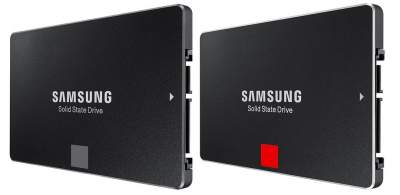

Samsung releases world’s first 2TB consumer SSDs

Samsung releases world’s first 2TB consumer SSDs

Today, Samsung announced what it is calling the first multi-terabyte consumer solid-state drive (SSD), which will provide 2TB of capacity in a 2.5-inch form factor for desktops and laptops. The new 850 Pro and 850 EVO SSDs double the maximum capacity of the current SSDs.

Like their predecessors, the new 850 SSD Pro and EVO drives remain in the same 7mm, 2.5-in. aluminum case. The storage capacities include 120GB, 250GB, 500GB, 1TB and 2TB.

Samsung releases massive 2TB SSDs, adds them to its 850 Evo and 850 Pro families


Designed for power users and client PCs that may need higher performance, the 850 Pro with up to 550MBps sequential read and 520MBps sequential write rates and up to 100,000 random I/Os per second (IOPS). However, the 850 EVO SSD has slightly lower performance with 540MBps and 520MBps sequential read/write rates and up to 90,000 random IOPS.

Both the SSD models come native with full AES 256-bit full disk encryption capability, like the previous SSDs.

The SSDs are made up of 128 individual 32-layer 16GB 3D V-NAND flash chips, along with an upgraded high-performance MHX controller, and four 20 nanometer (nm) size process 4Gb LPDDR3 DRAM chips.

While Samsung was the first to begin mass producing its own version of 3D NAND in 2013, Intel, Micron and other flash makers too have rolled out their own versions.

According to Samsung, the 3D NAND technology offers two to 10 times higher reliability and twice the write performance over planar (2D) flash memory, along with far greater density.

The new drives touted to have double the storage capacity along with a 10-year warranty too


The biggest difference on paper is the specified durability and the length of the warranty. Samsung guarantees the 2TB 850 Pro for 10 years or 300 terabytes written (TBW), and the 2TB 850 EVO for five years or 150 TBW.

Samsung 850 Pro was reviewed by Computerworld last year and it was found to be quick and cheap.

With the introduction of V-NAND flash memory, Un-Soo Kim, Samsung has witnessed a sudden large increase in demand for 500GB and higher capacity SSDs, said Un-Soo Kim, Samsung’s senior vice president of branded product marketing,

“The release of the 2TB SSD is a strong driver into the era of multi-terabyte SSD solutions,” Kim said.

While the 2TB model of the 850 Pro will sell for $999.99, the 850 EVO will retail for $799.99.

The 120GB will sell for $69, the 250GB for $99, the 500GB for $179 and the 1TB EVO SSD for $399. On the other hand, the 128GB 850 Pro will retail for $99 (Rs.6300), the 256GB for $144.99 (Rs.9200), the 512GB for $259 and the 1TB for $499 .

Microsoft has $500K in prize money for HoloLens science projects

Microsoft wowed me a few weeks ago with its internal HoloLens programs, but like we've seen with Kinect, the coolest uses aren't always the ones Redmond devised. To help make more applications a reality, the tech giant has opened up what it's calling the Academic Research Request for Proposals. Five awards -- each including $100,000 and two HoloLens development kits -- will go to accredited universities and be announced this October 6th. The official reasoning here is that Microsoft wants to "better understand the role and possible applications for holographic computing in society." So, to see what people outside of the Redmond campus think augmented reality is capable of. Got it. Other objectives include spurring research for mixed reality and generally getting more people to make holograms. A few examples the company lays out are data visualizations (similar to Epic Games) and creating 3D models for medical training.


Microsoft stresses that these proposals need to be absolutely complete and that those submitting them be fully capable of carrying out the research or experiments. From the sounds of it, projects that answer high-value research questions and could be easily published in places like academic journals will curry favor among judges. All that to say, Microsoft isn't giving any of these awards out lightly. Think your US-based institution has what it takes? Deadline for sign-ups is September 5th.


Source

Google needs to fix what ails Chrome


Google needs to fix what ails Chrome


I've been a big fan of the Chrome browser for a very long time. On Linux it has worked like a champ since day one. However, I have noticed things are starting to go a bit awry...on Linux, on Android, on Chrome OS.

Memory usage is getting out of hand
Battery life is negatively impacted (especially on Chromebooks and Macbooks)
CPU strain is noticeable
Certain pages (like Facebook) randomly crash
The list goes on and on and it is a problem. At least on the Linux platform, I can always rush back to Firefox until Google gets Chrome sorted out. Even on Android, I can install Firefox and am good to go. That, of course, leaves all of my Chromebooks with a big question mark. I have noticed, of late, battery life on my Chromebooks isn't quite up to snuff. This is all due to, you guessed it, Chrome.

There is, however, good news on the horizon. The Chrome team is fully aware of the issues that are starting to negatively impact the browser and are working diligently on them. In fact, some of the issues have already been resolved (background tabs having same priority as foreground tabs, which led to outrageous memory usage). But remember, Chrome was built, from the ground up, with a singular flaw in that it handles each tab and every plugin as a separate process. That was fine a few years ago—back when websites weren't nearly as complicated or mobile usage didn't make up the majority of browsing time. Now, with the complexity of sites like Facebook, Chrome needs to evolve in such a way that Android, Chrome OS, Linux, Windows, Mac...every platform...doesn't suffer the slings and arrows of outrageous memory usage.

One of the reasons the masses migrated from Firefox to Chrome was that it was a lean, stripped-down machine that clobbered every browser on the planet for speed and efficiency. It was, without a doubt, a much needed breath of fresh, fast air.

But now, Chrome is just as bogged down as Firefox was before the tide shifted.

This is not good...not when mobile platforms actually depend upon that particular browser. We cannot place all our cards on the Chrome table when Chrome is going to eat through those cards and cause the battery operated shuffling machine to come to a crawling stop.

I have always understood why Chrome did things they way they chose. It made perfect sense. But there are simply too many sites and services that opt out of the communication pipeline which only has the effect of breaking things faster than a clumsy seven year old boy. This means more sites bringing more browsers to a halt.

The truth of the matter is simple: Every browser on the planet has to make one very important shift—focus on mobile. This couldn't possibly be any more relevant for Chrome...a browser that serves as a central focus for an entire platform—Chrome OS lives and dies by the Chrome Browser.

The good news (especially for Chrome OS users) is that you can opt to use a version of Chrome that enjoys fixes and updates faster than the stable platform. Opt for the Beta or Dev channel on your Chromebook and many of these issues will vanish far sooner than they would on the Stable channel (I no longer use the Stable channel on any of my Chromebooks and have noticed an improvement). Even on the Android platform, you can opt to use either the Beta or Dev version of Chrome to vanquish some of the issues away.

I would love to see Chrome return to form—back to a leaner, meaner time when Google's browser didn't make or break an experience. Fortunately, I trust Google with this issue. They know how much is riding on not allowing their browser to get out of hand. Anyone using the Android or Chrome OS platform understands the importance of Google putting these major issues to rest. Otherwise, that tide will shift back to Firefox and Google's darling Chrome OS will take a serious hit.

No matter how much we all want to deny it, Google was right in thinking the web browser would eventually become central to productivity. It has and it is. Now it's up to the juggernaut to bring their browser back to a state that doesn't have mobile users scrambling to reboot or recharge devices.

How do you view Google Chrome at the moment? Is it in desperate need of change, or is it working without fail for you?

YouTube star PewDiePie made $7 million in 2014 !

YouTube star PewDiePie made $7 million in 2014 !

Last year around this time, word got out that Felix Kjellberg, a 24-year-old Swedish bro known online as PewDiePie, made $4 million a year by playing video games, recording his reactions and uploading the resulting videos to YouTube. At the time, he had 27 million YouTube subscribers. Today, Kjellberg has 37.7 million subscribers on YouTube and his company, PewDiePie Productions, pulled in roughly $7.4 million in revenue in 2014, according to Swedish newspaper Expressen. It looks like this whole "watch people play video games on the internet" craze is here to stay.


When Kjellberg's revenue numbers hit last year, he was inundated with questions and messages of incredulity -- so many that he did a Reddit AMA to clear the air. He confirmed the $4 million figure and noted that he does charity work alongside his "Let's Play" gaming videos: "I still spent far more money on charities than anything I've ever spent for myself. Which I am proud to say at least." In June 2014, Kjellberg announced that his bro army (see: fans) had raised more than $1 million for various charities, including the World Wildlife Fund, Save the Children, St. Jude hospital and Charity: Water. In March this year, Charity: Water thanked Kjellberg for helping 10,028 people in Rwanda get access to clean water. Not bad for a band of bros.

Kjellberg's next big thing is the launch of his book, titled This Book Loves You, a collection of inspirational quotes that he's said over the years as an online personality. For example: "Don't be yourself. Be a pizza. Everyone loves pizza." This Book Loves You is due to drop in October.